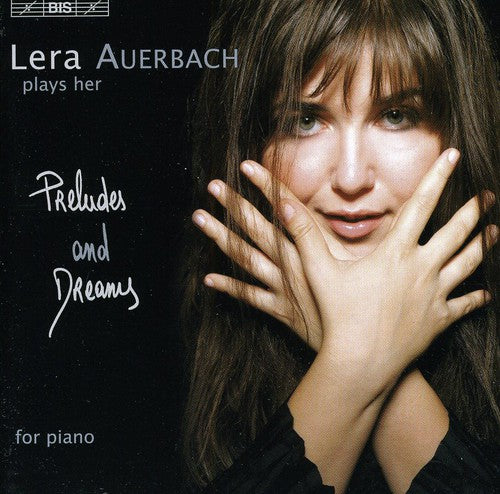
Auerbach: Preludes Op 41, Ten Dreams Op 45, Etc

Lera Auerbach's music is direct, immediate in impact, volatile in mood, and never at a loss for big gestures. As I indicated in my review of an earlier Auerbach BIS release, the composer clearly has imbibed from the bountiful Shostakovich/Schnittke watering hole, but her own voice always comes across, especially in her gift for pulling ingenuous surprise endings out of the blue. Following the same key scheme as Chopin's Op. 28 Preludes, Auerbach's own group of 24 provides plenty of stimulating listening and comprehensive pianism. In the G major and B minor Preludes, for example, Auerbach takes the slow, obsessive repeated-note aesthetic of Ravel's Gibet to new and dramatically disquieting levels, while sprinkling sparse, dissonant melodic droplets on top of a lulling left-hand ostinato in the F-sharp major. The E-flat starts out like a brooding chorale prelude injected with late Shostakovich gloom and doom, then builds to a slow-motion, frenzied climax. The G-sharp minor contains more harmonic spice than most brutally pounded-out marches.
Although stylistically similar to the Preludes, the Ten Dreams Op. 45 are much darker in tone and last half as long (they take 21 minutes to the Preludes' 45). The opening movement of the Chorale, Fugue and Postlude is the work's strongest, where resonating B minor chords with endless fermatas stand as pillars for slow, processional chorale-like phrases that seem to provide their own Russian male choir.
I'm glad that BIS has taken advantage of the composer's keyboard prowess, because Auerbach plays Auerbach marvelously. She commands a huge sonority and wide dynamic range, along with fluid, flexible fingers that can handle anything. In particular, Auerbach is a past master at balancing those closely-voiced chords she loves so that each note stands in clear relation to its neighbor, like jewels in a tiara rather than grains in mush. She may not push the composer/pianist tradition into new terrain, yet there's no doubt that Lera Auerbach has something quite potent to say.
--Jed , ClassicsToday.com
$21.99
Auerbach: Preludes Op 41, Ten Dreams Op 45, Etc—
$21.99
Product Information
Product Information
Shipping & Returns
Shipping & Returns
Description
Lera Auerbach's music is direct, immediate in impact, volatile in mood, and never at a loss for big gestures. As I indicated in my review of an earlier Auerbach BIS release, the composer clearly has imbibed from the bountiful Shostakovich/Schnittke watering hole, but her own voice always comes across, especially in her gift for pulling ingenuous surprise endings out of the blue. Following the same key scheme as Chopin's Op. 28 Preludes, Auerbach's own group of 24 provides plenty of stimulating listening and comprehensive pianism. In the G major and B minor Preludes, for example, Auerbach takes the slow, obsessive repeated-note aesthetic of Ravel's Gibet to new and dramatically disquieting levels, while sprinkling sparse, dissonant melodic droplets on top of a lulling left-hand ostinato in the F-sharp major. The E-flat starts out like a brooding chorale prelude injected with late Shostakovich gloom and doom, then builds to a slow-motion, frenzied climax. The G-sharp minor contains more harmonic spice than most brutally pounded-out marches.
Although stylistically similar to the Preludes, the Ten Dreams Op. 45 are much darker in tone and last half as long (they take 21 minutes to the Preludes' 45). The opening movement of the Chorale, Fugue and Postlude is the work's strongest, where resonating B minor chords with endless fermatas stand as pillars for slow, processional chorale-like phrases that seem to provide their own Russian male choir.
I'm glad that BIS has taken advantage of the composer's keyboard prowess, because Auerbach plays Auerbach marvelously. She commands a huge sonority and wide dynamic range, along with fluid, flexible fingers that can handle anything. In particular, Auerbach is a past master at balancing those closely-voiced chords she loves so that each note stands in clear relation to its neighbor, like jewels in a tiara rather than grains in mush. She may not push the composer/pianist tradition into new terrain, yet there's no doubt that Lera Auerbach has something quite potent to say.
--Jed , ClassicsToday.com